
Ascendente, Luna y Sol: Las Tres Anclas
Una lección profunda para principiantes sobre los tres pilares principales de una carta védica: Lagna para la orientación de la vida, la Luna para la mente y el tiempo, y el Sol para la vitalidad y el propósito.
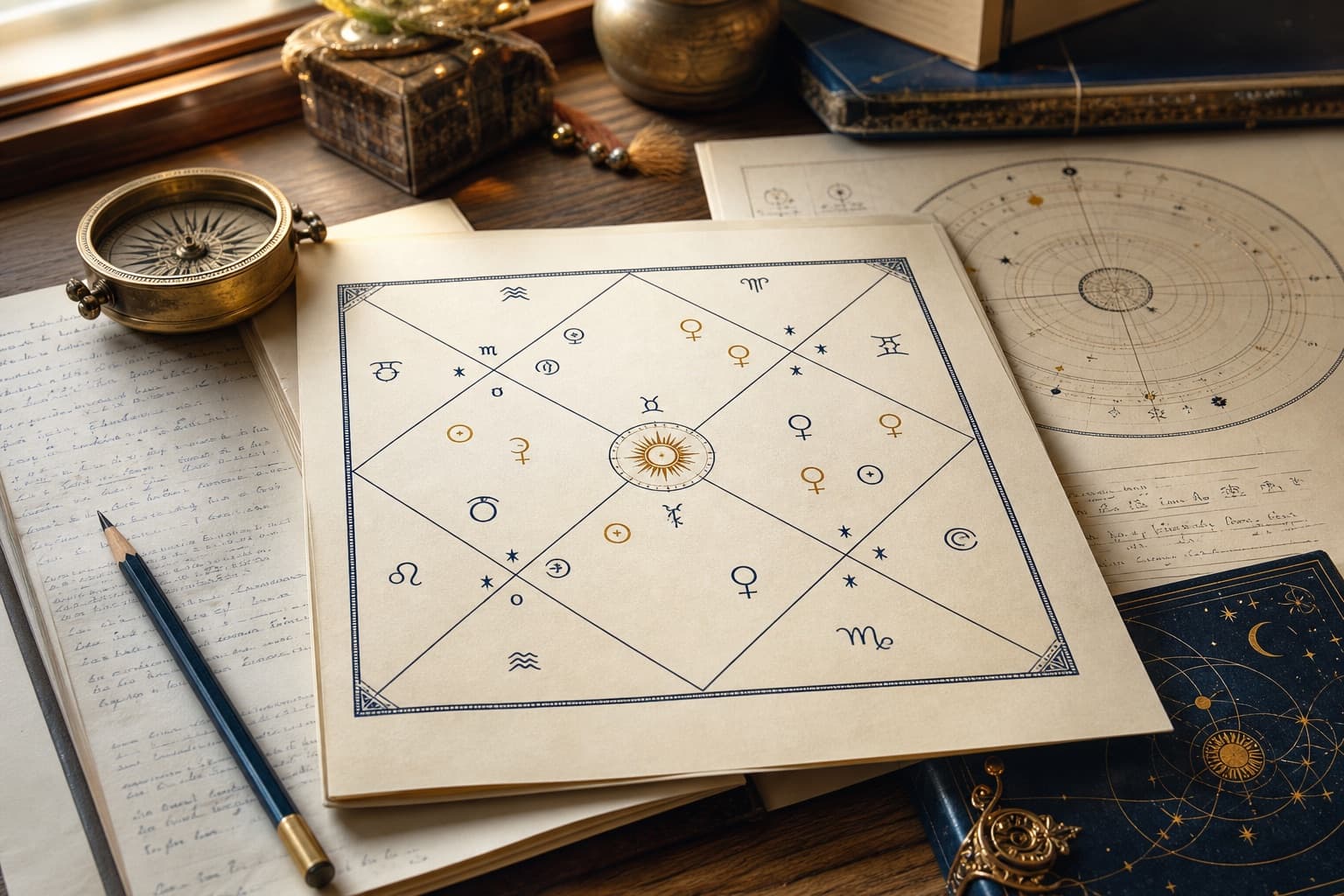
cuaderno visual
Cómo estudiar esta lección
Lea el concepto, mapéelo en un Kundli real y luego pruebe si la conclusión se deriva de la evidencia gráfica.
ancla
paso 1Gramática
paso 2Auditoría
paso 3receta de lectura
- 1Por qué se necesitan tres anclas
- 2Lagna: la puerta de la carta
- 3Luna: el clima interior vivido
- 4Sol: vitalidad, autoridad y propósito.
Disciplina estudiantil
No memorices esto como una predicción fija. Úselo como método: identifique el factor, verifique la condición, compare las capas de soporte y luego escriba una respuesta útil.
Por qué se necesitan tres anclas
A chart needs more than one center. Lagna anchors the body, environment, and house sequence. Moon anchors the mind, emotional rhythm, memory, comfort, and nakshatra-based timing. Sun anchors vitality, authority, visibility, father/leadership themes, and the need to act from purpose.
When these three anchors agree, the chart has a cleaner dominant tone. When they differ, the person may experience life through multiple internal rhythms: one way of acting, another way of feeling, and another way of seeking recognition.
Lagna: la puerta de la carta
The Lagna is the sign rising on the eastern horizon at birth. In practical reading, it starts the houses and shows how life is approached through body, temperament, instinct, and circumstance. It also determines functional house lordships, which is why the same planet behaves differently for different ascendants.
For example, Saturn for Capricorn Lagna carries 1st and 2nd house topics, while Saturn for Leo Lagna carries 6th and 7th house topics. The planet is the same, but its chart responsibility changes.
- Use Lagna for body and life orientation.
- Use Lagna to assign houses.
- Use Lagna to determine functional lordships.
- Use Lagna before judging career, marriage, money, or health routines.
Luna: el clima interior vivido
The Moon describes how experience is received. It is central to emotional rhythm, daily comfort, attachment, memory, and the mind's habit of responding. In Jyotish, the Moon is also central because Vimshottari dasha begins from Moon nakshatra and many compatibility methods depend on Moon nakshatra.
A strong Moon can show steadier emotional processing. A pressured Moon may show sensitivity, reactivity, worry, dependency, or changing moods. But the correct reading depends on house, sign, aspects, nakshatra, and timing.
Sol: vitalidad, autoridad y propósito.
The Sun shows visible life force, authority, self-respect, leadership, and the part of the chart that wants to stand upright. It can show relationship with authority figures and the way a person handles recognition, dignity, and responsibility.
In Vedic astrology, the Sun is important but not the whole chart. A person is not their Sun sign alone. The Sun should be read through house, sign, dignity, aspects, dispositor, and whether it is active by dasha or transit.
Cómo sintetizar los tres
Use a simple sentence formula: Lagna shows how life is approached; Moon shows how life is felt; Sun shows how purpose and authority are expressed. Then add house placements. A Cancer Lagna with Moon in Aquarius and Sun in Gemini is very different from Cancer Lagna with Moon in Cancer and Sun in Aries.
When answering a user, begin with the anchor most relevant to the question. For emotional concerns, start with Moon. For body, identity, and life direction, start with Lagna. For leadership, vitality, or father/authority themes, start with Sun.
Términos relacionados
sigue estudiando
¿Qué es un Kundli?
Una lección fundamental del curso sobre qué es un Kundli, qué datos lo crean, cómo encajan sus capas y cómo leerlo de manera responsable.
Estudiar artículoCasas, planetas y signos
Un marco completo para leer cualquier factor del gráfico separando el área de vida, el planeta actuante y el entorno del signo.
Estudiar artículo