
Cómo leer el gráfico D1
Un orden de operaciones de estilo profesional para leer el gráfico D1 desde la orientación del gráfico completo hasta la síntesis de un tema específico.
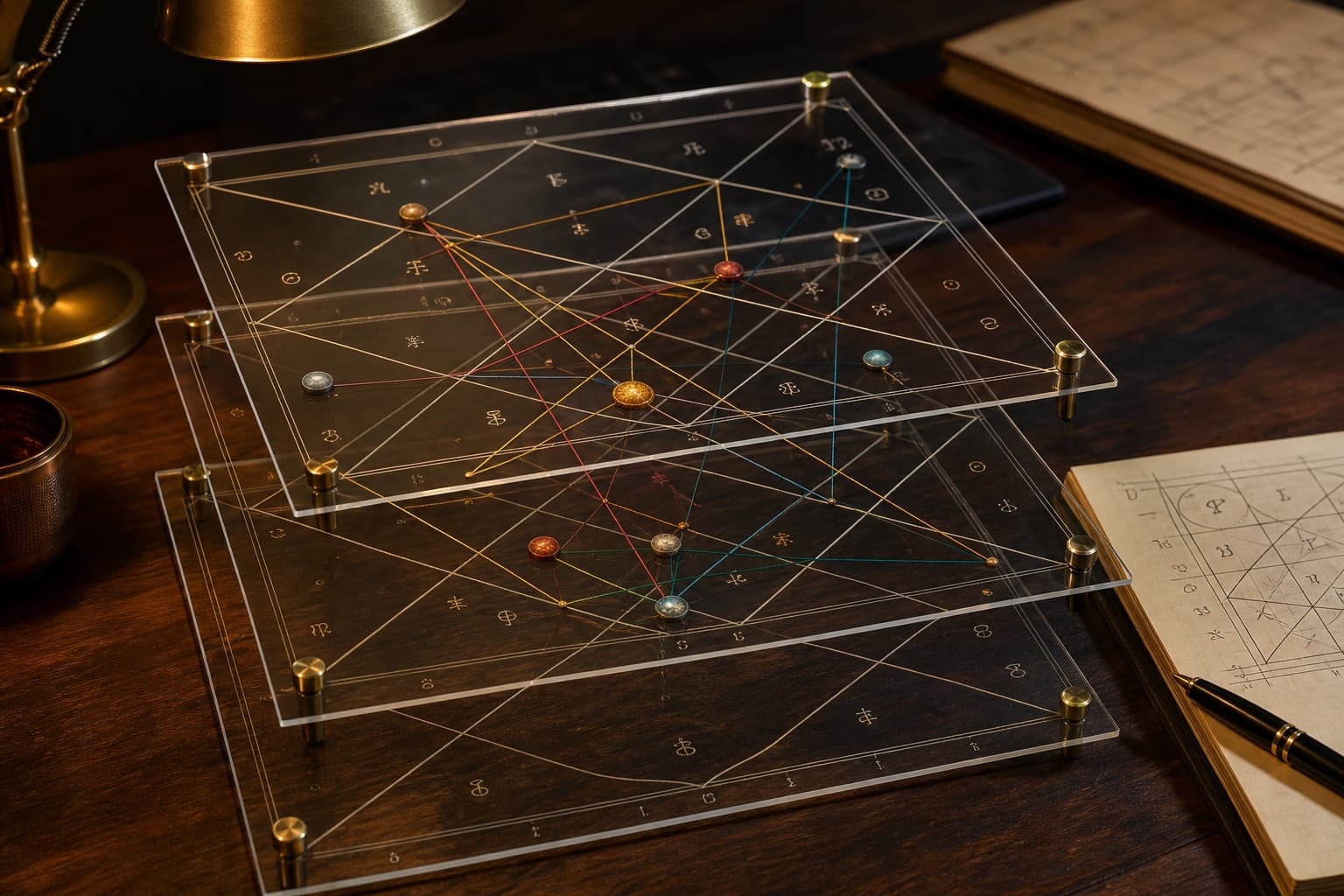
cuaderno visual
Cómo estudiar esta lección
Lea el concepto, mapéelo en un Kundli real y luego pruebe si la conclusión se deriva de la evidencia gráfica.
D1 primero
paso 1método de tema
paso 2Síntesis
paso 3receta de lectura
- 1Por qué D1 es lo primero
- 2El escaneo completo del gráfico
- 3El método de la casa
- 4Condición del planeta y papel funcional.
Conceptos para reconocer
Disciplina estudiantil
No memorices esto como una predicción fija. Úselo como método: identifique el factor, verifique la condición, compare las capas de soporte y luego escriba una respuesta útil.
Por qué D1 es lo primero
The D1 Rashi chart is the main life map. It gives the Lagna, house sequence, planetary sign placements, house lordships, and the broad structure of life themes. Divisional charts are valuable, but they refine the D1; they do not replace it.
A common beginner mistake is to jump into D9 or a yoga list before understanding the D1. This creates disconnected interpretation. A professional reader first asks: what is the main chart saying?
El escaneo completo del gráfico
Begin with a whole-chart scan before answering any specific question.
- Lagna sign and Lagna lord condition.
- Moon sign, nakshatra, house, and lord.
- Sun sign, house, and dignity.
- Most occupied houses.
- Angular houses and trines.
- Current Mahadasha and Antardasha.
- Planets that are exalted, debilitated, own-sign, combust, retrograde, or heavily aspected.
El método de la casa
For any topic, read the house in five passes: sign in the house, planets in the house, house lord placement, aspects to the house or lord, and relevant karakas. This is the minimum method for avoiding weak interpretation.
For example, career is not only the 10th house. It includes the 10th house, 10th lord, Sun, Saturn, Mercury, D10, the 6th for work routines, the 2nd and 11th for income, and current dasha.
Condición del planeta y papel funcional.
A planet has natural meaning, but its functional role depends on Lagna. A natural benefic can rule difficult houses. A natural malefic can rule highly important houses. Read the planet's dignity and functional ownership together.
This is why generic statements fail. Saturn is not simply bad, and Jupiter is not simply good. The chart asks: what does this planet rule, where is it placed, how strong is it, and what does timing activate?
Síntesis antes de la conclusión.
After collecting indicators, decide whether they agree, conflict, or require timing. If several indicators point to the same theme, confidence rises. If indicators conflict, the interpretation should say what is supported and what needs care.
A good final answer includes opportunity, caution, timing, and next step. It does not merely list placements.
Términos relacionados
sigue estudiando
D9 and D10: When Divisional Charts Matter
Una lección más profunda sobre D9 y D10 como tablas de refinamiento para madurez, relaciones, dharma, carrera, trabajo público y fuerza planetaria.
Estudiar artículoAspectos, Yogas y Señoríos
Una lección avanzada sobre cómo construir la interpretación clásica a partir del señorío, aspectos, conjunciones, validación del yoga y activación del tiempo.
Estudiar artículo