
Ashtakoot
Una lección completa sobre la comparación clásica de Ashtakoot: qué mide, qué omite y cómo explicar una puntuación sin reducir una relación a un número.
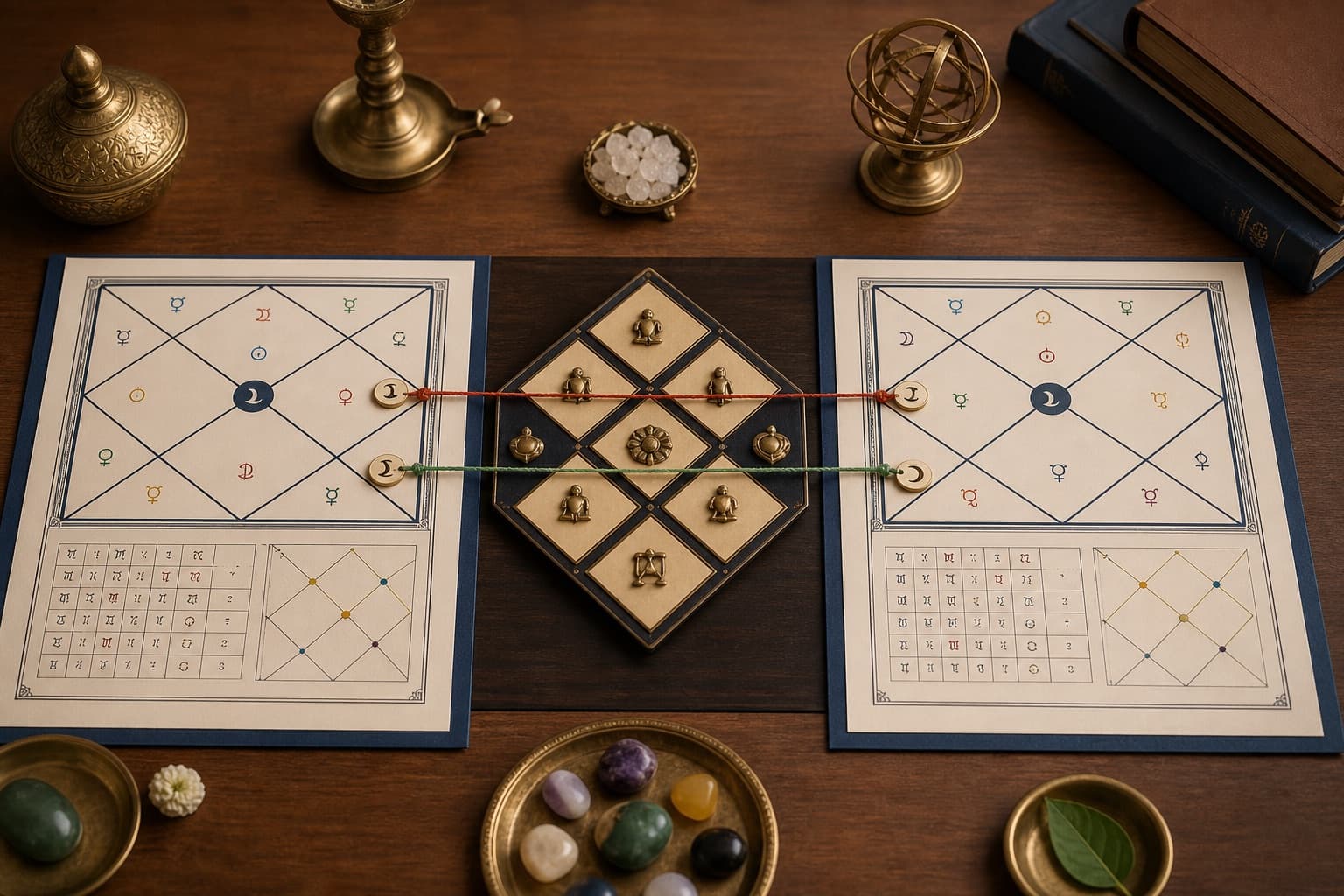
cuaderno visual
Cómo estudiar esta lección
Lea el concepto, mapéelo en un Kundli real y luego pruebe si la conclusión se deriva de la evidencia gráfica.
Puntuación
paso 1Casas de relación
paso 2Preparación
paso 3receta de lectura
- 1Lo que mide Ashtakoot
- 2Los ocho kootas
- 3Por qué la puntuación total puede inducir a error
- 4Cómo leer los factores débiles
Disciplina estudiantil
No memorices esto como una predicción fija. Úselo como método: identifique el factor, verifique la condición, compare las capas de soporte y luego escriba una respuesta útil.
Lo que mide Ashtakoot
Ashtakoot, also called Guna Milan, compares two people primarily through Moon nakshatra and Moon-sign factors. It is useful because the Moon describes emotional rhythm, habit, comfort, and the way people respond to each other in daily life.
It is not a complete marriage verdict. It does not directly inspect each person's 7th house, 7th lord, D9 Navamsa, Venus, Mars, Jupiter, current dasha, or practical life situation. A serious compatibility report should use Ashtakoot as one layer inside a wider review.
Los ocho kootas
The classical 36 points are distributed across eight factors. Each factor describes a different kind of compatibility.
- Varna: broad temperament and spiritual orientation.
- Vashya: attraction, influence, and mutual responsiveness.
- Tara: nakshatra-based wellbeing and support rhythm.
- Yoni: instinctive chemistry and intimate temperament.
- Graha Maitri: friendship between Moon-sign lords, often read as mental compatibility.
- Gana: temperament group and behavioral style.
- Bhakoot: Moon-sign distance and household/emotional compatibility.
- Nadi: vitality rhythm and traditional lineage-health compatibility caution.
Por qué la puntuación total puede inducir a error
A total such as 28/36 looks clear, but it can hide important details. Two charts may score well overall while failing Nadi or Bhakoot. Another pair may score modestly but show strong D1, D9, 7th house, and dasha support.
The right product language is not perfect match or bad match. The right language is: classical score, strongest supports, main cautions, and what must be reviewed in the full charts.
Cómo leer los factores débiles
A weak factor should be translated into a practical question. Low Graha Maitri asks how communication and worldview will be handled. Low Gana asks whether temperaments are naturally compatible. Nadi concern asks for cautious review rather than panic. Bhakoot concern asks whether emotional distance, household rhythm, or family patterns need attention.
This keeps the reading useful. Instead of alarming the user, the report should say what the couple should discuss and what the pundit should review.
Cuando se requiere una revisión del cuadro completo
Full review is required when high-severity dosha flags appear, when birth times are uncertain, when families are making a major decision, when the score is borderline, or when the same exact chart or duplicate link is used accidentally.
A professional match should compare both D1 charts, both D9 charts, each 7th house and 7th lord, Venus and Mars conditions, Jupiter support, Moon condition, dasha timing, and practical readiness.
Términos relacionados
sigue estudiando
Manglik y la casa 7
Una seria lección de compatibilidad sobre la lógica de Manglik, la revisión de la séptima casa, los factores de equilibrio y cómo explicar de manera responsable la presión en las relaciones relacionadas con Marte.
Estudiar artículoPartido detallado versus puntaje simple
Una lección práctica sobre la diferencia entre una puntuación de compatibilidad rápida, una coincidencia detallada basada en Kundli y una revisión profesional.
Estudiar artículo