
பிரிவு விளக்கப்படங்கள் எவ்வாறு பெறப்படுகின்றன
A practical study of the complete 16-chart Shodashavarga set, from D1 through D60, and how to use calculated varga signs without overclaiming.
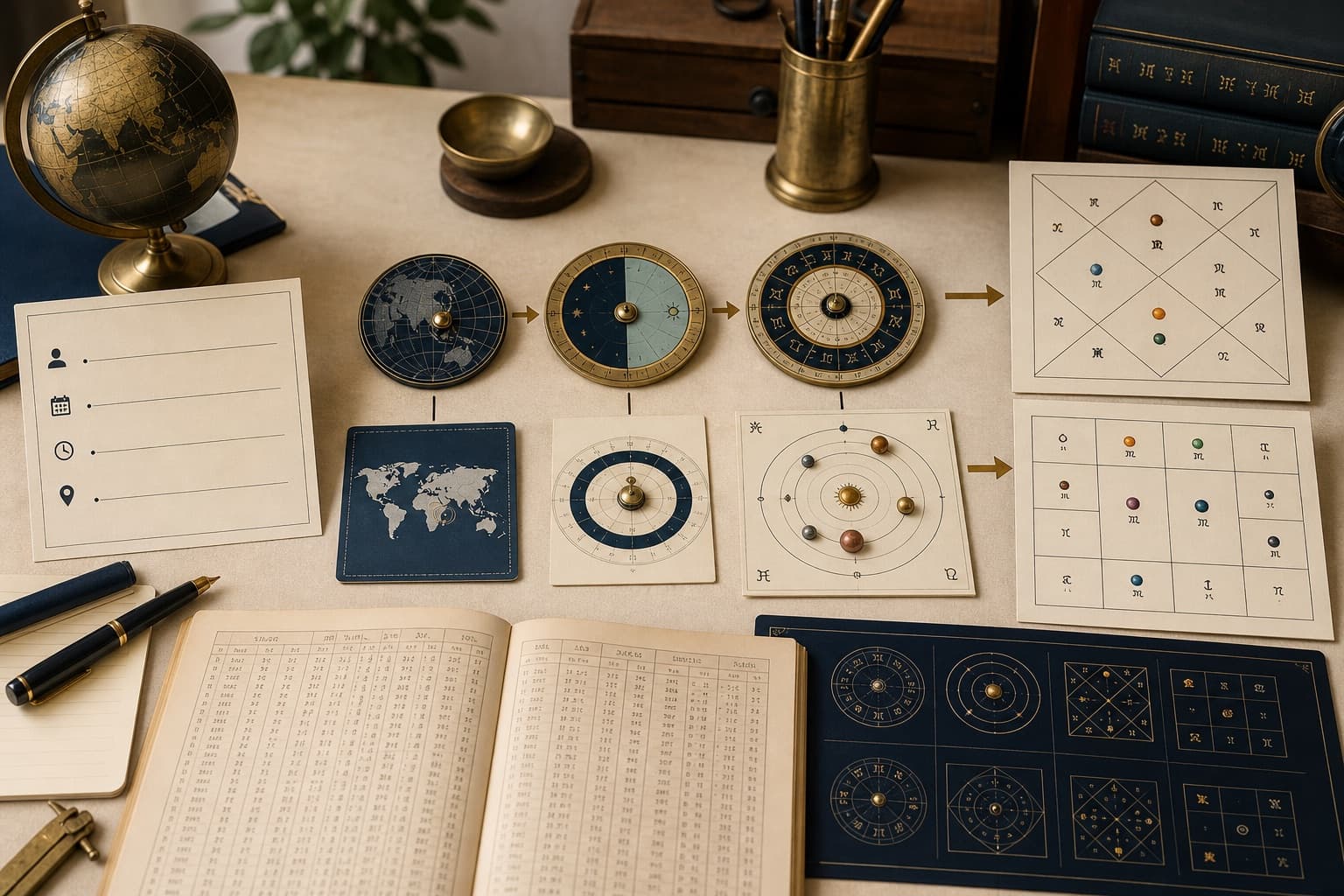
காட்சி நோட்புக்
இந்த பாடத்தை எப்படி படிப்பது
கருத்தைப் படித்து, அதை ஒரு உண்மையான குண்ட்லியில் வரைபடமாக்குங்கள், பின்னர் விளக்கப்பட ஆதாரத்திலிருந்து முடிவு பின்பற்றப்படுகிறதா என்று சோதிக்கவும்.
உள்ளீடுகள்
படி 1கணக்கீடு
படி 2காட்சி
படி 3வாசிப்பு செய்முறை
- 1என்ன ஒரு வர்கா
- 2பயன்பாட்டில் உள்ள முக்கிய வகைகள்
- 3பிரிவு விளக்கப்படங்களை எவ்வாறு பொறுப்புடன் படிப்பது
- 4ஏன் பிறந்த நேரம் முக்கியமானது
மாணவர் ஒழுக்கம்
இதை ஒரு நிலையான கணிப்பு என்று மனப்பாடம் செய்யாதீர்கள். இதை ஒரு முறையாகப் பயன்படுத்தவும்: காரணியை அடையாளம் காணவும், நிலையை சரிபார்க்கவும், துணை அடுக்குகளை ஒப்பிடவும், பின்னர் பயனுள்ள பதிலை எழுதவும்.
என்ன ஒரு வர்கா
A varga divides a sign into smaller portions and maps a planet's degree into another sign framework. D9 Navamsa divides each sign into nine parts. D10 Dasamsa divides each sign into ten parts. The engine stores these as varga signs for each planet and the ascendant.
This makes divisional chart output explainable: the D9 sign is not guessed by the AI; it is mathematically derived from the sidereal degree of the planet.
பயன்பாட்டில் உள்ள முக்கிய வகைகள்
The detailed report surfaces the most practical varga set for users and pundits.
- D1 Rashi: the main life field and primary chart.
- D2 Hora: resources and wealth handling.
- D3 Drekkana: effort, siblings, courage, and skills.
- D4 Chaturthamsa: home, property, fortune, and foundations.
- D7 Saptamsa: children, creativity, and lineage.
- D9 Navamsa: dharma, maturity, marriage, and planet strength refinement.
- D10 Dasamsa: career, public work, reputation, and execution.
- D12 Dwadasamsa: parents, ancestry, and inherited patterns.
- D16 Shodashamsa: vehicles, mobility, and comforts.
- D20 Vimshamsa: spiritual practice and inner development.
- D24 Chaturvimshamsa: education, learning, and mastery.
- D27 Bhamsa: strength, stamina, and resilience.
- D30 Trimsamsa: challenges and vulnerability, used cautiously.
- D40 Khavedamsa: maternal lineage and inherited support.
- D45 Akshavedamsa: paternal lineage, character, and conduct.
- D60 Shashtiamsa: deep karmic patterns, interpreted cautiously because it is highly birth-time sensitive.
பிரிவு விளக்கப்படங்களை எவ்வாறு பொறுப்புடன் படிப்பது
A divisional chart should refine a topic already visible in D1. It should not be used to invent a topic that has no support in the main chart. If D1 career indicators are mixed, D10 can clarify the style and maturity of career expression. If D1 relationship indicators are active, D9 can refine commitment, values, and long-term maturity.
This protects the reading from becoming a scattered list of charts. The student should ask: what topic am I reading, which varga is relevant, and does it support or complicate the D1 story?
ஏன் பிறந்த நேரம் முக்கியமானது
Planetary varga signs depend on planetary degrees, so they can change near division boundaries. Ascendant vargas and house-based divisional interpretation are even more time-sensitive. A small birth-time error can shift the ascendant or divisional house emphasis.
For a user-facing report, this means exact-time charts can support richer divisional guidance, while unknown-time charts should keep divisional claims cautious.
தயாரிப்பு அதை எவ்வாறு கற்பிக்க வேண்டும்
The Learning Center should teach that D charts are supporting context. The report should begin with a D1 + D9 + D10 synthesis for users, then provide all 16 Shodashavarga charts and their complete technical grid for deeper review. This lets casual users start with meaning while advanced readers can audit the raw structure.
தொடர்புடைய விதிமுறைகள்
தொடர்ந்து படிக்கவும்
How the PanditOne Engine Works
A transparent walkthrough of the calculation pipeline from birth data to planets, houses, dashas, divisional charts, and report-ready interpretation signals.
கட்டுரை படிக்கவட இந்திய மற்றும் தென்னிந்திய விளக்கப்பட வடிவங்கள்
A deep explanation of how the same D1 chart appears in two classical visual traditions and why the display format should not change the calculation.
கட்டுரை படிக்க