
व्यावसायिक पाम फोटो मानके
How to capture, validate, and read palm photos with orientation, lighting, framing, left-right detection, and confidence levels.
व्हिज्युअल नोटबुक
या धड्याचा अभ्यास कसा करायचा
संकल्पना वाचा, खऱ्या कुंडलीवर मॅप करा, त्यानंतर चार्ट पुराव्यावरून निष्कर्ष येतो की नाही ते तपासा.
प्रथम प्रतिमा
पायरी 1दृश्यमान वाचन
पायरी 2कुंडली खोली
पायरी 3कृती वाचत आहे
- 1वापरता येण्याजोग्या फोटोची काय गरज आहे
- 2डावे आणि उजवे प्रमाणीकरण
- 3मार्गदर्शन पुन्हा घ्या
- 4आत्मविश्वास पातळी
ओळखण्यासाठी संकल्पना
विद्यार्थ्यांची शिस्त
हे निश्चित अंदाज म्हणून लक्षात ठेवू नका. एक पद्धत म्हणून वापरा: घटक ओळखा, स्थिती तपासा, समर्थन स्तरांची तुलना करा, नंतर उपयुक्त उत्तर लिहा.
वापरता येण्याजोग्या फोटोची काय गरज आहे
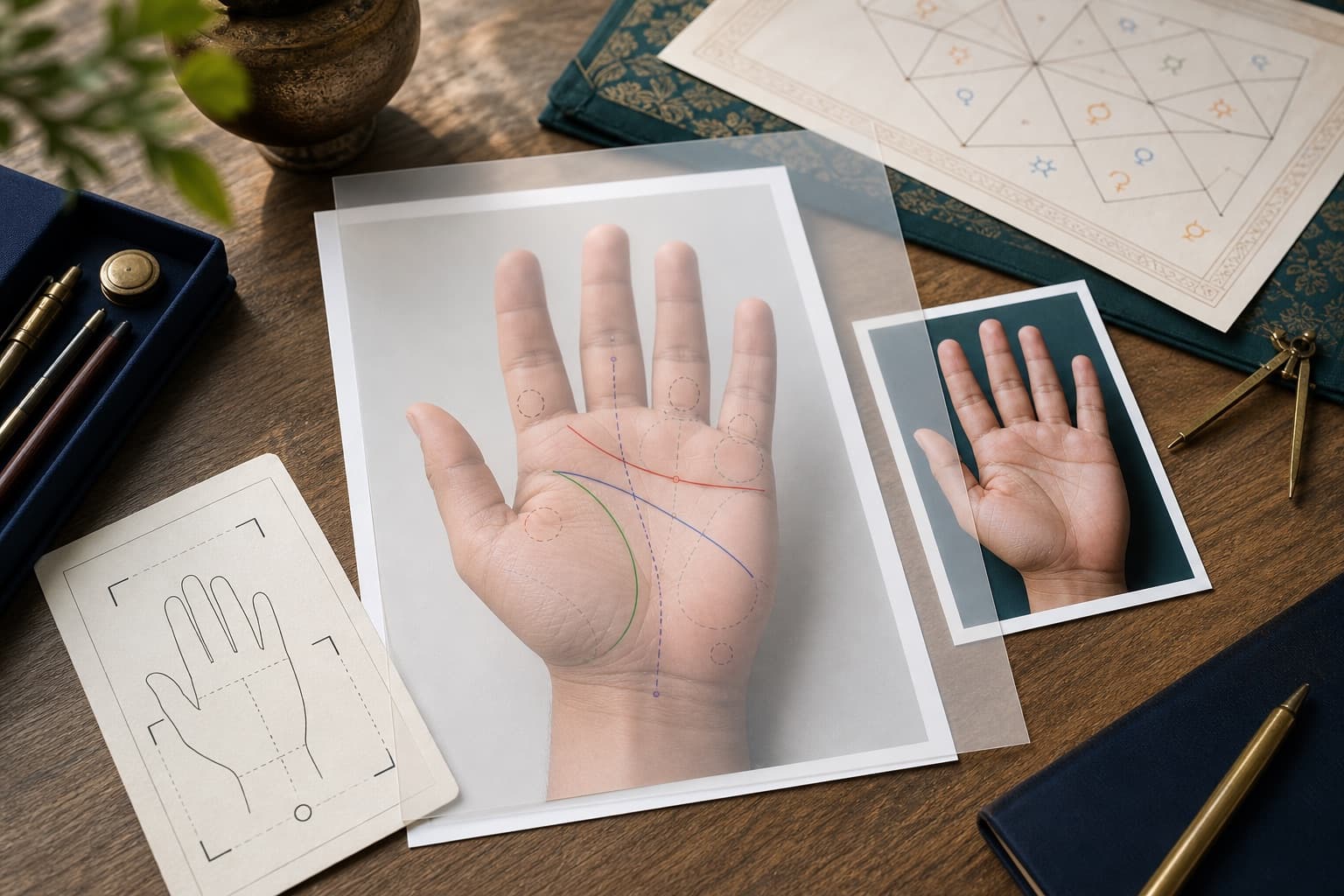
A usable palm photo should show an open palm, fingers up, wrist down, thumb visible, full palm centered, adequate light, and enough resolution to see the major creases. Decorative images, screenshots, documents, or cropped hands should be rejected.
डावे आणि उजवे प्रमाणीकरण
For a palm-facing photo, a right hand usually has the thumb on the viewer's left, while a left hand usually has the thumb on the viewer's right. But camera mirroring and rotation can confuse this, so the interface should let users rotate, center, and confirm.
मार्गदर्शन पुन्हा घ्या
Retake suggested should always explain why.
- Palm not centered.
- Fingers or wrist cropped.
- Thumb side unclear.
- Image too dark or blown out.
- Blurred lines.
- Hand side mismatch.
- Not a palm image.
आत्मविश्वास पातळी
If quality is strong, the reading can speak more directly. If quality is usable, the reading should be cautious. If quality is poor, the product should not generate a fake reading; it should ask for a better image.
संबंधित अटी
अभ्यास करत रहा
पाम लाइन्स मूलभूत
फोटो गुणवत्ता, प्रमुख रेषा, रेषा स्पष्टता, आरोहण आणि सुरक्षित व्याख्या सीमा यावर एक संपूर्ण हस्तरेषाशास्त्र पाया धडा.
लेख वाचाडावा आणि उजवा हात
प्रबळ हात, बेसलाइन हँड, डावी/उजवीकडे ओळख, अभिमुखता आणि वापरकर्त्याला गोंधळात टाकल्याशिवाय दोन्ही तळवे यांची तुलना करणे यावर संरचित धडा.
लेख वाचा