
Vimshottari Dasha Deep Dive
A complete course lesson on Mahadasha, Antardasha, Pratyantar, dasha lord condition, and how to answer timing questions responsibly.
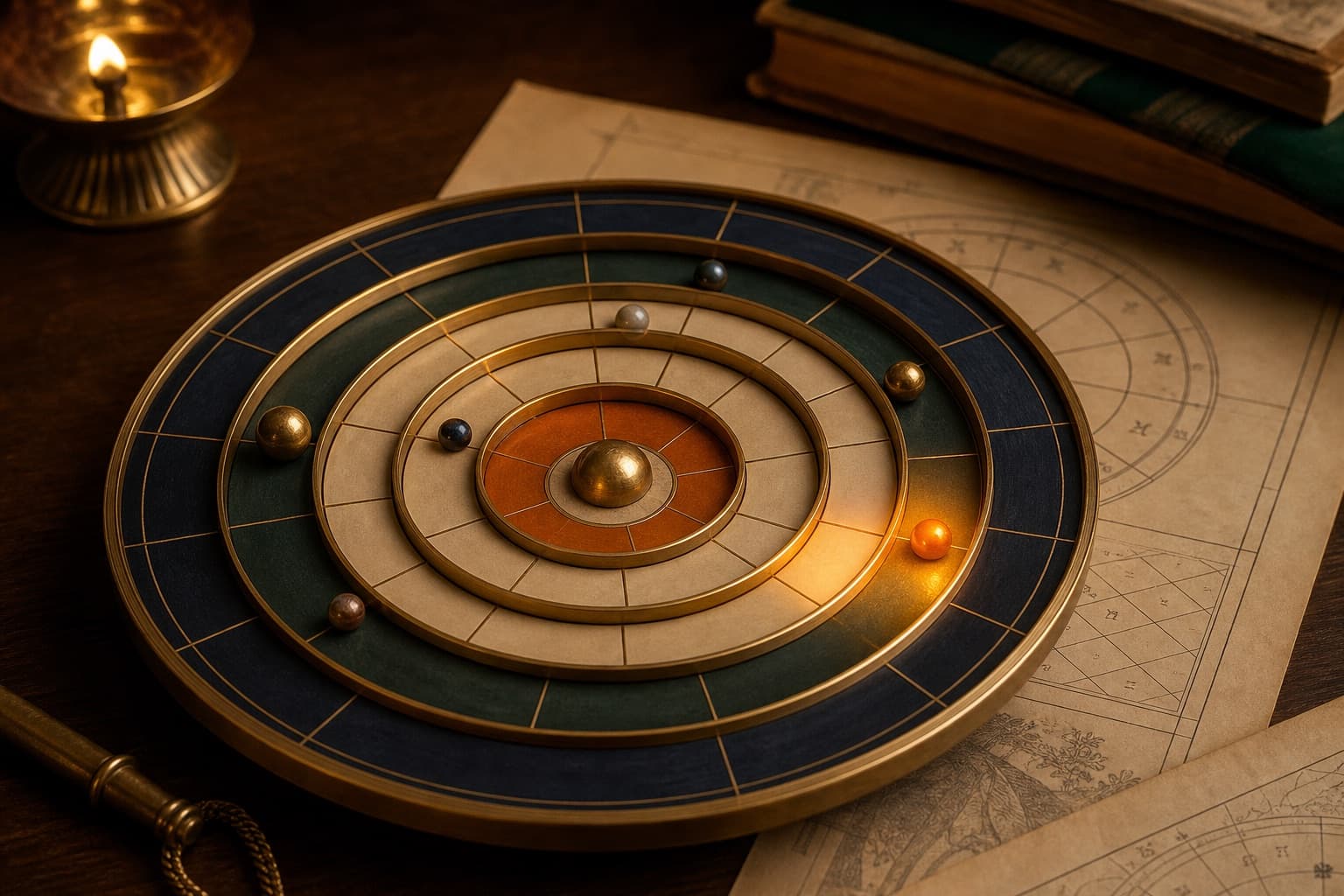
Visual notebook
How to study this lesson
Read the concept, map it onto a real Kundli, then test whether the conclusion follows from chart evidence.
Mahadasha
Step 1Antardasha
Step 2Transit overlay
Step 3Reading recipe
- 1Why Vimshottari matters
- 2Reading a dasha lord
- 3Mahadasha, Antardasha, Pratyantar
- 4Timing answer structure
Concepts to recognize
Student discipline
Do not memorize this as a fixed prediction. Use it as a method: identify the factor, check condition, compare supporting layers, then write a useful answer.
Why Vimshottari matters
Vimshottari dasha is one of the most commonly used timing systems in Jyotish. It divides life into planetary chapters, beginning from the Moon's nakshatra at birth. This is why Moon nakshatra accuracy matters.
A dasha period does not create themes from nothing. It activates what is promised or suggested in the chart.
Reading a dasha lord
Read the dasha lord through a full checklist.
- Planet's natural meaning.
- House occupied.
- Houses ruled.
- Dignity and condition.
- Conjunctions and aspects.
- Relevant divisional chart support.
- Connection to the user's question.
- Transits to the dasha lord, Moon, and Lagna.
Mahadasha, Antardasha, Pratyantar
Mahadasha is the major chapter. Antardasha shows the active subtheme. Pratyantar gives a more immediate layer. A Jupiter Mahadasha may feel very different during Saturn Antardasha than during Venus Antardasha.
When answering users, avoid giving a long technical tree first. Start with the current period and explain what it asks them to focus on now.
Timing answer structure
A strong timing answer has four parts: current period, chart area activated, opportunity, and watch-out. For example: Rahu period activates 12th house themes, so foreign links, retreat, expenses, and unconventional growth may be visible; the watch-out is shortcuts, restless decisions, and unclear boundaries.
Related terms
Keep studying
Dasha Basics
A full beginner-to-intermediate lesson on Vimshottari timing: Mahadasha, Antardasha, Pratyantar, dasha lord condition, and how timing becomes practical guidance.
Study articleTransits and Sade Sati
A deeper lesson on using transits from Lagna and Moon, with special care around Saturn, Jupiter, Rahu/Ketu, and Sade Sati.
Study article