
Los Nueve Grahas como Funciones Gráficas
A complete beginner lesson on the planets as living functions: body, mind, action, relationship, wisdom, discipline, karmic appetite, and release.
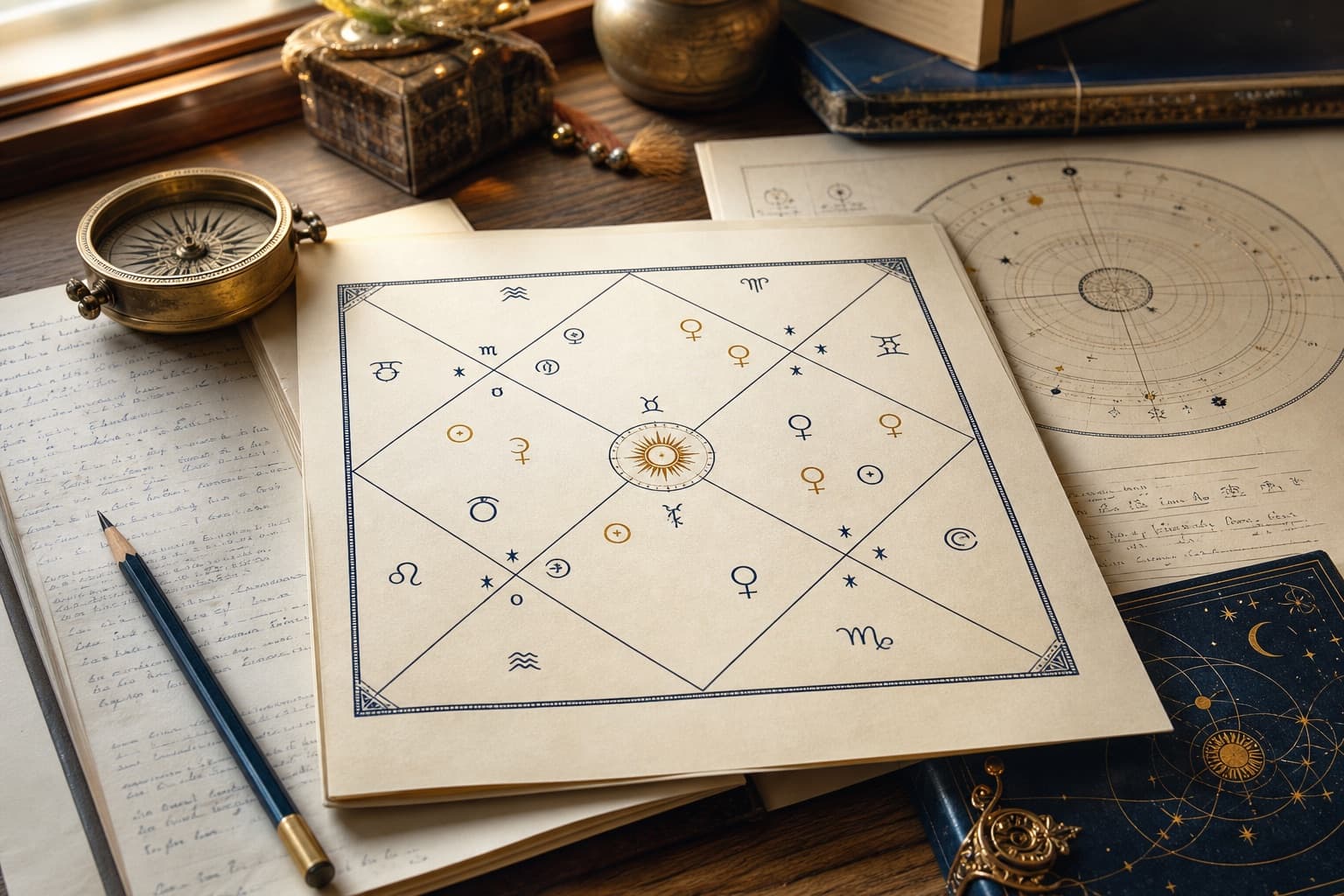
cuaderno visual
Cómo estudiar esta lección
Lea el concepto, mapéelo en un Kundli real y luego pruebe si la conclusión se deriva de la evidencia gráfica.
ancla
paso 1Gramática
paso 2Auditoría
paso 3receta de lectura
- 1Los grahas como funciones
- 2Naturalmente benéfico y maléfico no significa bueno o malo.
- 3Lista de verificación de lectura del planeta
- 4Cómo esto cambia la interpretación
Conceptos para reconocer
Disciplina estudiantil
No memorices esto como una predicción fija. Úselo como método: identifique el factor, verifique la condición, compare las capas de soporte y luego escriba una respuesta útil.
Los grahas como funciones
Jyotish uses the grahas as active chart functions. The Sun shows vitality, authority, visibility, and the need to stand in purpose. The Moon shows emotional rhythm, memory, comfort, care, and how the mind receives experience.
Mars shows initiative, courage, competition, conflict, engineering, and direct action. Mercury shows speech, learning, trade, analysis, humor, and adaptability. Jupiter shows wisdom, guidance, faith, teachers, children, ethics, and expansion.
Venus shows relationship, aesthetics, pleasure, refinement, art, agreements, and value exchange. Saturn shows responsibility, pressure, endurance, boundaries, labor, delay, and maturity. Rahu shows appetite, ambition, foreignness, disruption, unusual pathways, and amplification. Ketu shows detachment, simplification, expertise, inwardness, and release.
Naturalmente benéfico y maléfico no significa bueno o malo.
Jupiter, Venus, a strong Moon, and Mercury when unafflicted are often called natural benefics because they tend to support growth, ease, learning, or harmony. Saturn, Mars, Sun, Rahu, Ketu, and a weakened Moon are often treated as natural malefics because they bring heat, pressure, separation, discipline, or intensity.
This language should not be used simplistically. Saturn can create mastery and stability. Mars can create courage. Rahu can create breakthrough. Jupiter can over-expand. Venus can over-attach. A good reading asks what the planet is doing in this chart, not whether the planet is generically good or bad.
Lista de verificación de lectura del planeta
For any planet, move through the same checklist before making a statement.
- Which sign is it in and what is its dignity?
- Which house does it occupy?
- Which houses does it rule for this Lagna?
- Which planets aspect or conjoin it?
- Is it active by dasha, transit, or topic question?
- Does D9 or a relevant divisional chart repeat the same theme?
Cómo esto cambia la interpretación
A planet in the 10th house is not automatically career success. It may show public visibility, pressure, skill, service, instability, or leadership depending on dignity and lordship. A planet in the 7th house is not automatically marriage outcome; it can show clients, contracts, public dealing, and the style of one-to-one exchange.
This is the discipline that separates a serious chart reading from a list of isolated placements.
Términos relacionados
sigue estudiando
¿Qué es un Kundli?
Una lección fundamental del curso sobre qué es un Kundli, qué datos lo crean, cómo encajan sus capas y cómo leerlo de manera responsable.
Estudiar artículoAscendente, Luna y Sol: Las Tres Anclas
Una lección profunda para principiantes sobre los tres pilares principales de una carta védica: Lagna para la orientación de la vida, la Luna para la mente y el tiempo, y el Sol para la vitalidad y el propósito.
Estudiar artículo