
Las Doce Casas como mapa de vida
A course-style tour of all twelve houses and how to read them through body, resources, courage, home, creativity, service, partnership, transformation, dharma, work, gains, and release.
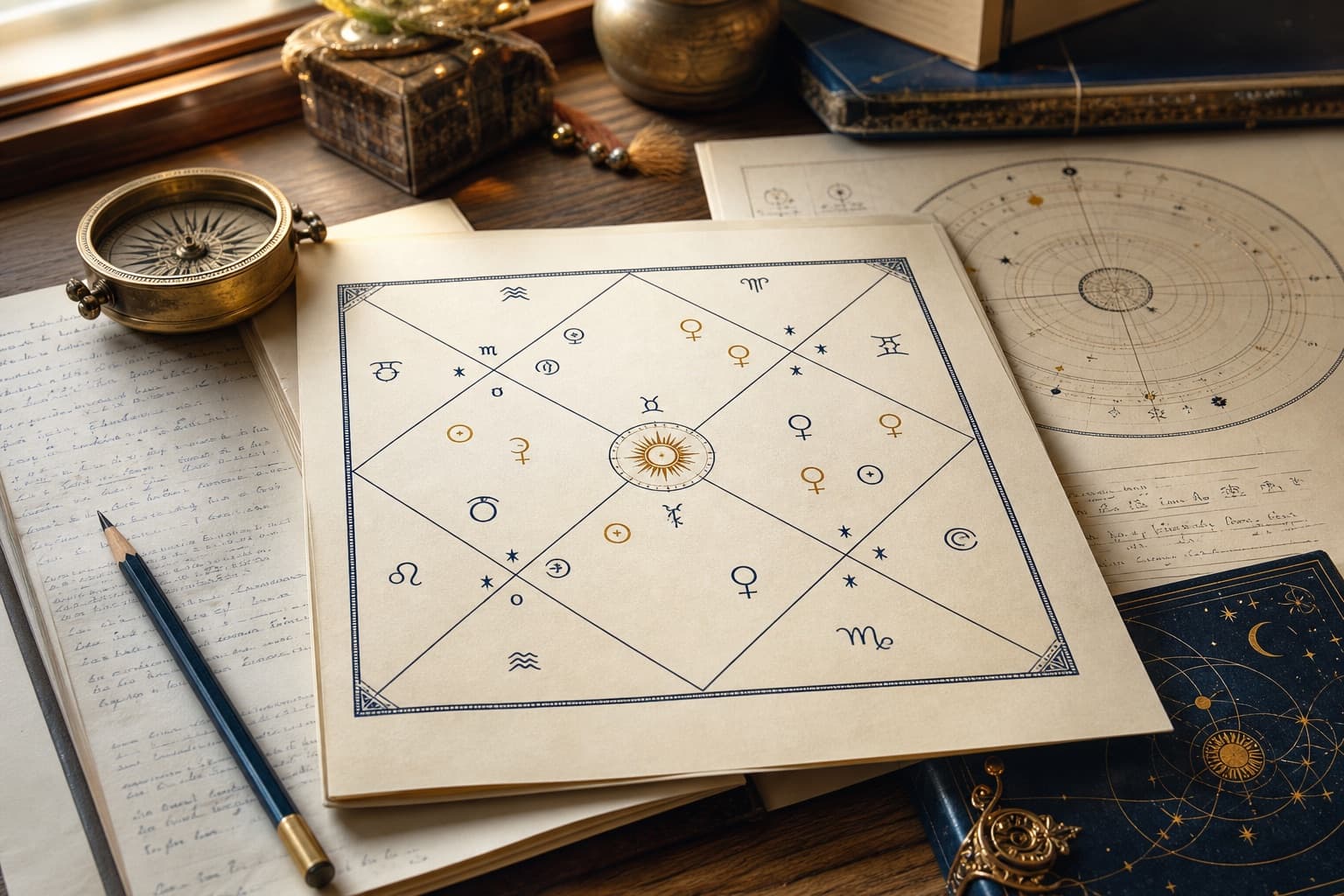
cuaderno visual
Cómo estudiar esta lección
Lea el concepto, mapéelo en un Kundli real y luego pruebe si la conclusión se deriva de la evidencia gráfica.
ancla
paso 1Gramática
paso 2Auditoría
paso 3receta de lectura
- 1la secuencia de la casa
- 2Cómo leer una casa vacía
- 3Categorías de casas
- 4Método de lectura del tema
Conceptos para reconocer
Disciplina estudiantil
No memorices esto como una predicción fija. Úselo como método: identifique el factor, verifique la condición, compare las capas de soporte y luego escriba una respuesta útil.
la secuencia de la casa
The 1st house begins with the Lagna and describes body, identity, orientation, vitality, and how life is approached. The 2nd house describes speech, family values, stored resources, food, and early conditioning. The 3rd house describes courage, effort, siblings, skills, messaging, media, and self-initiated action.
The 4th house describes home, mother, education, vehicles, property, emotional security, and the private foundation. The 5th house describes creativity, children, learning, mantra, intelligence, romance, and merit. The 6th house describes service, routines, illness management, debts, conflicts, competition, and problem-solving.
The 7th house describes partnership, marriage, clients, contracts, public exchange, and the other person. The 8th house describes vulnerability, transformation, shared resources, research, inheritance, secrets, and deep psychological change. The 9th house describes dharma, teachers, father figures, long travel, higher learning, blessings, and belief.
The 10th house describes career, public responsibility, reputation, authority, karma in action, and contribution. The 11th house describes gains, networks, income from work, communities, ambitions, and elder siblings. The 12th house describes sleep, retreat, foreign lands, expenses, liberation, hospitals, ashrams, privacy, and endings.
Cómo leer una casa vacía
An empty 10th house does not mean no career. An empty 7th house does not mean no relationship. Empty houses are common. Read the sign in the house, the house lord, aspects to the house, relevant karakas, divisional charts, and dasha activation.
This is an important user-experience point. A professional report should avoid language like no data returned for an empty house. The correct message is that the house is read through its lord and related factors.
Categorías de casas
Traditional categories help you understand how houses behave together.
- Kendra houses: 1, 4, 7, 10. They are structural pillars.
- Trikona houses: 1, 5, 9. They show dharma, intelligence, and support.
- Upachaya houses: 3, 6, 10, 11. They improve through effort and time.
- Dusthana houses: 6, 8, 12. They show challenge, repair, loss, transformation, and service.
- Artha houses: 2, 6, 10. They connect to resources, work, and practical survival.
- Kama houses: 3, 7, 11. They connect to desire, initiative, relationship, and networks.
Método de lectura del tema
When a user asks about money, do not read only the 2nd house. Include the 2nd for stored resources, 11th for gains, 10th for career, 5th for speculation or intelligence, and dasha timing. When a user asks about relationships, include the 7th house, 7th lord, Venus, Jupiter, Mars, Moon, D9, and active dasha.
Términos relacionados
sigue estudiando
¿Qué es un Kundli?
Una lección fundamental del curso sobre qué es un Kundli, qué datos lo crean, cómo encajan sus capas y cómo leerlo de manera responsable.
Estudiar artículoAscendente, Luna y Sol: Las Tres Anclas
Una lección profunda para principiantes sobre los tres pilares principales de una carta védica: Lagna para la orientación de la vida, la Luna para la mente y el tiempo, y el Sol para la vitalidad y el propósito.
Estudiar artículo