
Partido detallado versus puntaje simple
Una lección práctica sobre la diferencia entre una puntuación de compatibilidad rápida, una coincidencia detallada basada en Kundli y una revisión profesional.
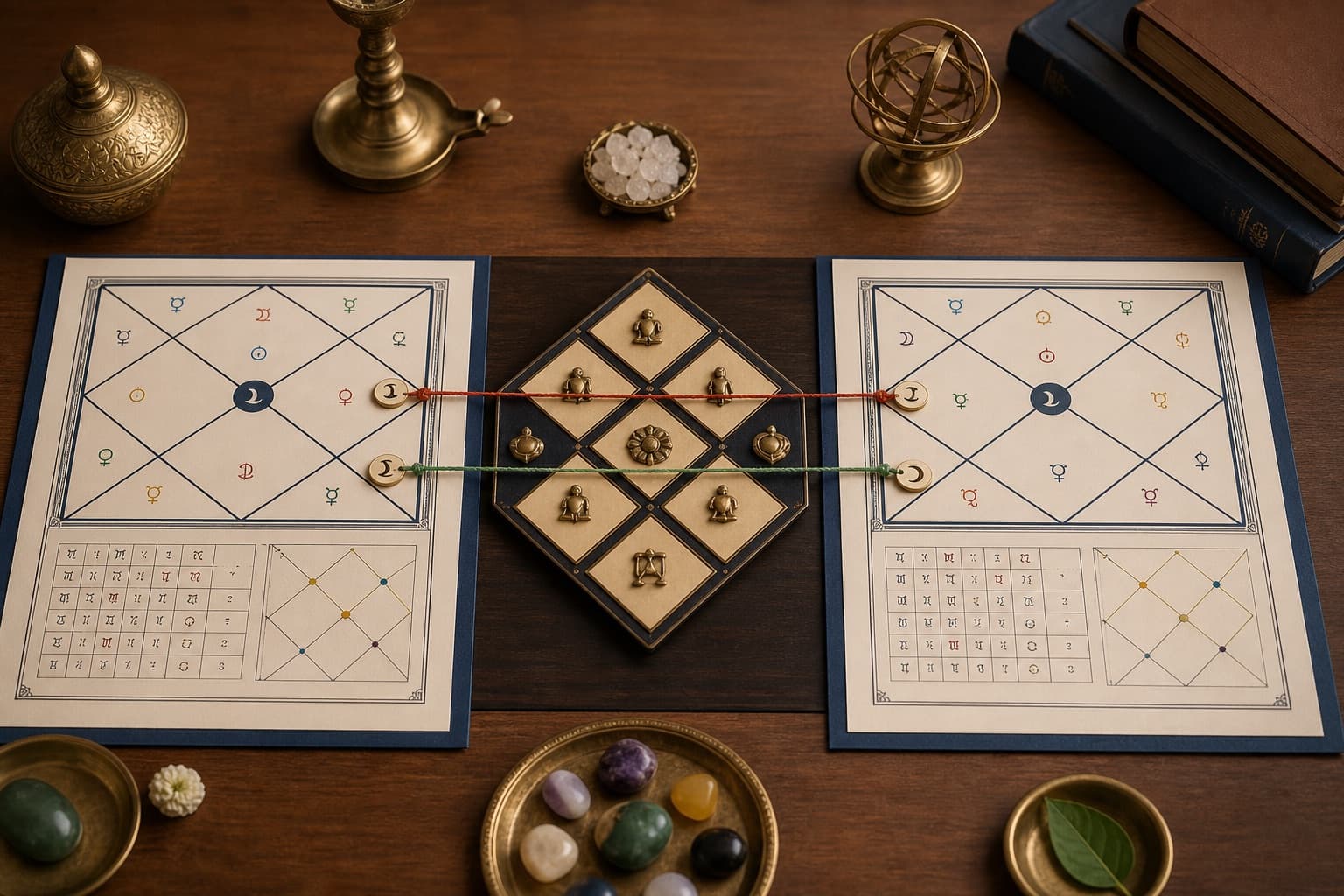
cuaderno visual
Cómo estudiar esta lección
Lea el concepto, mapéelo en un Kundli real y luego pruebe si la conclusión se deriva de la evidencia gráfica.
Puntuación
paso 1Casas de relación
paso 2Preparación
paso 3receta de lectura
- 1partido rápido
- 2Partido detallado de Kundli
- 3Qué debería responder una combinación premium
- 4Requiere revisión de expertos
Conceptos para reconocer
Disciplina estudiantil
No memorices esto como una predicción fija. Úselo como método: identifique el factor, verifique la condición, compare las capas de soporte y luego escriba una respuesta útil.
partido rápido
A quick match is useful when users want an immediate screening. It can calculate Ashtakoot, basic Moon reference, visible dosha flags, and a few relationship factors. It should be clear that this is a first look.
Quick match should never feel like the final authority on marriage. It should give value, preserve session state, and invite the user to add or generate both detailed Kundlis for a more serious reading.
Partido detallado de Kundli
A detailed match should use the full saved Kundli for both partners. It should compare D1, D9, 7th houses, lords, Venus, Mars, Jupiter, Moon, dasha timing, and practical readiness. It should also detect duplicate charts or the same link pasted into both slots.
This is where the product becomes premium: not more text, but better evidence, clearer organization, and guidance that a family or practitioner can actually discuss.
Qué debería responder una combinación premium
A serious report should answer a small number of real questions.
- Where is emotional compatibility naturally supportive?
- Where are communication and temperament likely to need care?
- Are the partnership houses strong, mixed, or stressed?
- Are Mars, Venus, Moon, Jupiter, and Saturn balanced or one-sided?
- Does D9 support long-term maturity?
- Are current dashas supportive for commitment or asking for patience?
- What should the couple discuss before deciding?
Requiere revisión de expertos
Requires Pundit Review should not sound like a failure. It means the system found factors that deserve human judgment: severe dosha flags, conflicting indicators, low score with strong D1/D9 support, high score with serious 7th-house stress, uncertain birth times, or sensitive family context.
The message should be: this is meaningful enough to review carefully, not this is bad.
Términos relacionados
sigue estudiando
Ashtakoot
Una lección completa sobre la comparación clásica de Ashtakoot: qué mide, qué omite y cómo explicar una puntuación sin reducir una relación a un número.
Estudiar artículoManglik y la casa 7
Una seria lección de compatibilidad sobre la lógica de Manglik, la revisión de la séptima casa, los factores de equilibrio y cómo explicar de manera responsable la presión en las relaciones relacionadas con Marte.
Estudiar artículo