
बाएँ और दाएँ हाथ
उपयोगकर्ता को भ्रमित किए बिना प्रमुख हाथ, बेसलाइन हाथ, बाएं/दाएं पहचान, अभिविन्यास और दोनों हथेलियों की तुलना पर एक संरचित पाठ।
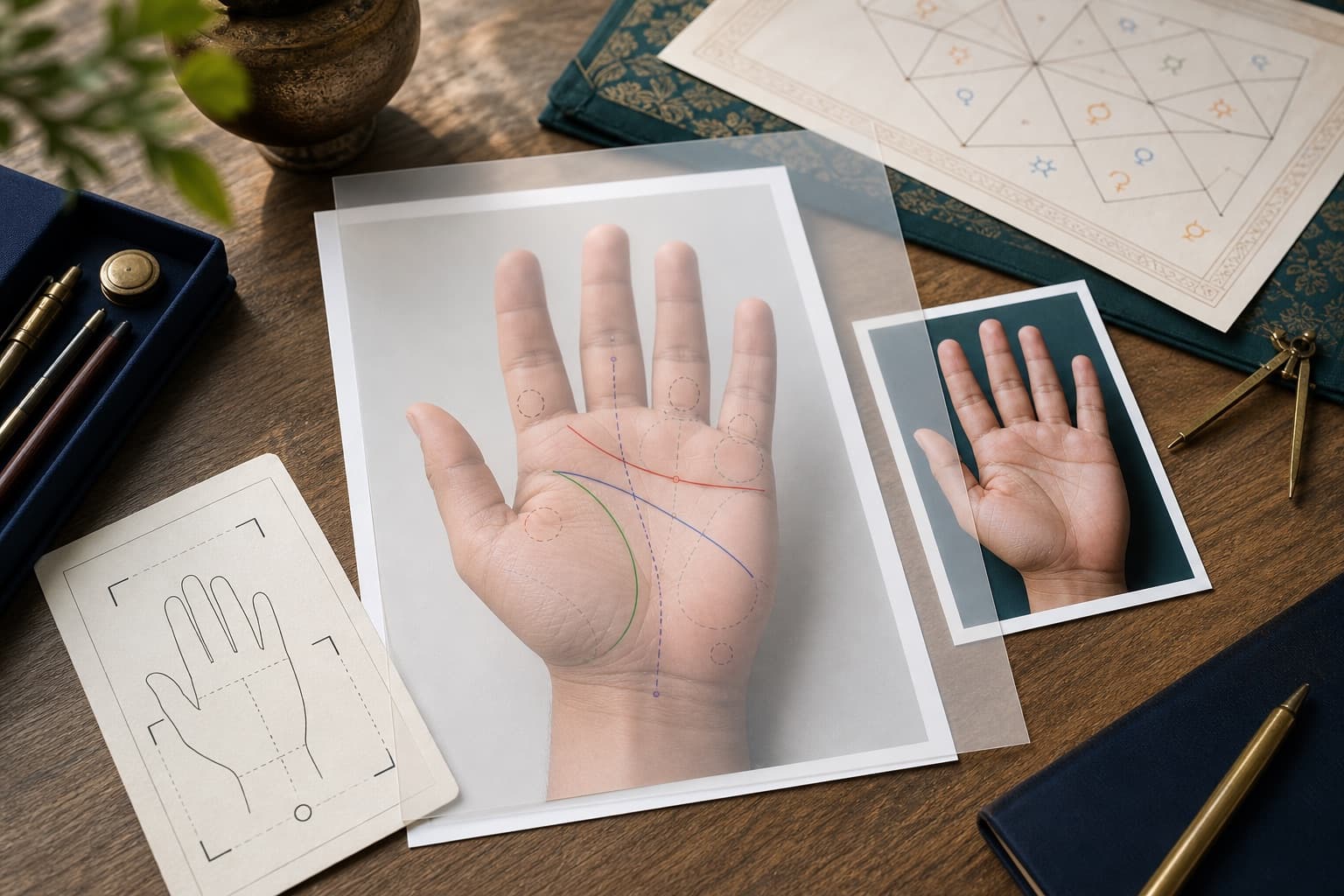
दृश्य नोटबुक
इस पाठ का अध्ययन कैसे करें
अवधारणा को पढ़ें, इसे वास्तविक कुंडली पर अंकित करें, फिर परीक्षण करें कि निष्कर्ष चार्ट साक्ष्य से मिलता है या नहीं।
पहले छवि
कदम 1दर्शनीय वाचन
कदम 2कुंडली की गहराई
कदम 3नुस्खा पढ़ना
- 1प्रमुख हाथ और सक्रिय पैटर्न
- 2बाएँ और दाएँ दर्शक-निर्भर हैं
- 3अभिविन्यास और फ़्रेमिंग
- 4दोनों हाथों की तुलना कैसे करें?
पहचानने योग्य अवधारणाएँ
विद्यार्थी अनुशासन
इसे एक निश्चित भविष्यवाणी के रूप में याद न रखें। इसे एक विधि के रूप में उपयोग करें: कारक की पहचान करें, स्थिति की जांच करें, सहायक परतों की तुलना करें, फिर एक उपयोगी उत्तर लिखें।
प्रमुख हाथ और सक्रिय पैटर्न
Many palmistry traditions read the dominant hand as the active, lived pattern: how choices, habits, and present expression are developing. The non-dominant hand may be read as baseline, inherited rhythm, earlier pattern, or background tendency.
If the user is unsure, the system can still read the clearer palm first and label the contrast as tentative.
बाएँ और दाएँ दर्शक-निर्भर हैं
A palm-facing right hand usually places the thumb on the viewer's left. A palm-facing left hand usually places the thumb on the viewer's right. Camera mirroring, selfies, rotation, and cropping can confuse simple detection.
That is why the product should combine automatic detection with user controls: rotate, center, fill the guide, and confirm hand side when needed.
अभिविन्यास और फ़्रेमिंग
The best reading frame has fingers up, wrist down, thumb visible, and the palm centered inside the guide. If the wrist or fingers are cut off, line zones can be misread. If the hand is tilted, line direction can look wrong.
A premium product should give correction guidance before generating a weak reading.
दोनों हाथों की तुलना कैसे करें?
When both palms are available, compare clarity and continuity of the major lines. If the active hand is clearer than the baseline hand, the person may be expressing the pattern more consciously now. If the baseline hand is clearer, the person may still rely on inherited or earlier rhythms.
Do not present differences as contradictions. Present them as lived pattern versus background tendency.
उपयोगकर्ता-सामना करने वाली भाषा
Instead of showing detected hand, palm score, finger cues, and internal confidence as the main result, say what the user can do: the left photo appears usable, the right photo needs brighter light, rotate the photo so fingers point upward, or confirm whether this is the correct hand.
संबंधित शर्तें
पढ़ते रहो
हस्तरेखा मूल बातें
फोटो की गुणवत्ता, प्रमुख रेखाएं, रेखा स्पष्टता, माउंट और सुरक्षित व्याख्या सीमाओं पर एक संपूर्ण हस्तरेखा विज्ञान आधार पाठ।
लेख पढ़ेंहस्तरेखा और कुंडली एक साथ
तात्कालिक दृश्य हुक के रूप में हस्तरेखा का उपयोग करने, फिर समय, दशा और गहन ज्योतिष संदर्भ के लिए कुंडली को आमंत्रित करने पर एक उत्पाद और सीखने का पाठ।
लेख पढ़ें